
How Does a Plastic Pulverizer Machine Improve Material Processing Efficiency?
A Plastic Pulverizer Machine is a high-precision mechanical system engineered to convert plastic materials—such as PVC, PE, LDPE, HDPE, PP, EVA, PET, and more—into fine powders with controlled particle sizes suitable for compounding, extrusion, coating, and recycling workflows. Its core function lies in delivering consistent output fineness, stable throughput, and reliable thermal control to maintain polymer quality during size-reduction.
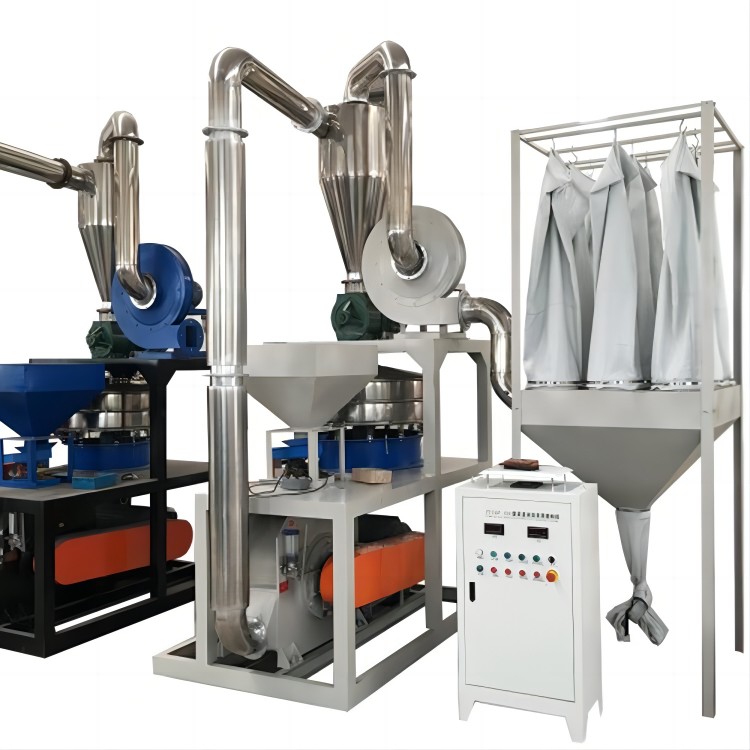
Overview of Plastic Pulverizer Machine Technology
A Plastic Pulverizer Machine operates through a combination of high-speed mechanical grinding, airflow transport, and precision temperature management. The purpose is to reduce plastic scrap or virgin pellets into uniform micro-powders that can be reintroduced into production lines without compromising material integrity. Modern systems are built with automated controls, advanced cooling structures, and durable grinding discs or mills that allow for long service cycles and stable operation under continuous load.
These machines are used widely in industries such as pipe manufacturing, film and sheet processing, wire and cable insulation, rigid plastic molding, and recycling facilities where fine powder is required for reprocessing. The central theme of this article focuses on how such systems support throughput, consistency, and operational optimization across varied industrial contexts.
To illustrate technical capability, the following table summarizes representative parameters commonly found in high-grade Plastic Pulverizer Machines.
Key Technical Parameters
| Parameter | Typical Specification Range | Description |
|---|---|---|
| Motor Power | 30–120 kW | Determines grinding speed and throughput capacity. |
| Output Capacity | 100–1200 kg/h | Indicates production efficiency per hour based on material type. |
| Powder Fineness | 10–120 mesh | Reflects the adjustable final particle size distribution. |
| Disc Diameter | 300–800 mm | Impacts cutting efficiency and thermal stability. |
| Cooling Method | Water cooling / Air cooling | Manages heat generated during pulverizing to protect polymers. |
| Material Compatibility | PVC, PE, HDPE, LDPE, PP, EVA, PET, etc. | Supports multiple resin types across industries. |
| Automation Level | Semi-automatic / Fully automatic | Ranges from standard control to fully integrated PLC systems. |
| Dust Collection | Cyclone separator + bag filter | Ensures clean workplace and reduced material loss. |
These parameters create a technical framework for evaluating performance and determining whether a specific machine aligns with industrial needs related to precision material handling and operational efficiency.
How Plastic Pulverizer Machines Streamline Industrial Processing
The efficiency of a Plastic Pulverizer Machine derives from its coordinated design elements: disc structure, thermal management, feeder stability, and dust control. Understanding how each contributes to workflow optimization is essential for selecting equipment suitable for high-volume, quality-critical production.
Grinding Mechanism and Particle Consistency
Grinding discs are engineered for uniform shearing and controlled heat generation. Their geometry, rotation speed, and surface treatment affect powder fineness and consistency. Materials such as PVC require careful thermal balancing because excessive heat may cause burning or degradation; therefore, optimized disc spacing and cooling are necessary to retain polymer characteristics.
During operation, material is fed into the chamber and reduced by successive impacts, friction, and cutting forces until particles pass through a precisely sized screen. The resulting powder must exhibit:
-
uniform distribution to ensure compatibility with extrusion or molding,
-
minimal thermal damage to maintain resin properties,
-
predictable flow behavior for downstream processing.
Stable particle distribution enables the reintroduction of recycled material without compromising end-product quality.
Throughput Optimization and Energy Management
High-capacity machines rely on efficient motors, balanced rotating elements, and automated feeding systems. The objective is to reduce energy waste while maintaining high throughput. Effective cooling systems prevent excessive heat accumulation, reducing the risk of downtime or maintenance.
Automated controls, such as PLC systems, further improve workflow by enabling operators to monitor:
-
grinding speed,
-
temperature,
-
vibration,
-
feeding consistency,
-
wear condition of discs.
Such monitoring supports preventive maintenance, optimizes uptime, and extends the lifecycle of machine components.
Compatibility with Multiple Industrial Materials
Plastic Pulverizer Machines are engineered to handle a diverse portfolio of plastics. Whether processing rigid PVC pipe scraps, soft LDPE films, or high-impact PP parts, the machine’s adaptability ensures manufacturers can reuse production scrap or recycle external materials.
This compatibility contributes to:
-
reduced raw material costs,
-
improved sustainability,
-
streamlined inventory management.
Dust Control, Safety, and Environmental Compliance
A complete system includes cyclone separators, suction fans, and bag-filter units to reduce airborne particulates, protect workers, and maintain cleanliness. Efficient dust collection also minimizes powder loss, ensuring that nearly all processed materials are recovered for reuse.
Such systems are increasingly important in manufacturing environments where environmental controls and regulatory compliance standards continue to evolve.
How to Select the Right Plastic Pulverizer Machine for Industrial Workflows
Selecting the right system requires a methodical evaluation of process demands, material characteristics, and operational constraints. This section outlines key considerations that manufacturers assess during procurement.
Analyze Material Requirements
Different materials exhibit varied melting points, hardness, and thermal sensitivities. For example:
-
PVC requires precise cooling and controlled shear to prevent discoloration.
-
PE and PP require higher impact force due to toughness and ductility.
-
PET requires fine particle sizes for effective blending in compounding.
Understanding these variables helps determine appropriate disc design, cooling type, and motor capacity.
Evaluate Desired Output Fineness
Production specifications define powder fineness based on intended applications. Film recycling may require coarser powder, while rotational molding typically demands finer, uniform particles. Adjustability in mesh size enables the machine to adapt to various production needs and industry standards.
Determine Optimal Capacity for Production Scale
Smaller operations may require systems in the 100–300 kg/h range, whereas large industrial plants often need systems capable of exceeding 1000 kg/h. Selecting appropriate capacity prevents overloading smaller machines and avoids unnecessary capital cost on oversized equipment.
Prioritize Durability and Maintenance Design
A durable pulverizer must feature:
-
hardened steel discs,
-
wear-resistant liners,
-
stable bearings,
-
accessible service areas.
Ease of maintenance reduces downtime and increases operational continuity, particularly in environments running multiple shifts.
Consider Automation Level and Integration Needs
Facilities with integrated production lines benefit from fully automated machines that connect with feeding units, silos, conveyors, and ERP systems. Automation supports:
-
stable throughput,
-
consistent powder quality,
-
reduced manual labor requirements,
-
traceable production data.
This aligns with modern manufacturing trends toward smarter, data-driven operations.
FAQ: Common Questions About Plastic Pulverizer Machines
Q1: How does temperature control influence powder quality during plastic pulverizing?
A1: Temperature control prevents polymer degradation during grinding. Excess heat causes discoloration, melting, odor generation, or molecular breakdown. Efficient cooling systems maintain material integrity by stabilizing shear temperature within optimal ranges, ensuring consistent particle size, proper resin flowability, and reliable downstream processing behavior.
Q2: How often should grinding discs be inspected or replaced in a Plastic Pulverizer Machine?
A2: Inspection frequency depends on workload, material hardness, and operational hours. Typically, discs in industrial environments should be inspected weekly for wear, spacing accuracy, and surface integrity. Replacement intervals vary from several months to over a year, depending on usage intensity. A preventive maintenance schedule ensures stable performance, reduces vibration, and prolongs overall equipment lifespan.
Strategic Role of Plastic Pulverizer Machines in Future Manufacturing
Shifts in global manufacturing emphasize improved efficiency, closed-loop recycling, and optimized use of industrial waste. Plastic Pulverizer Machines contribute to these trends by enabling on-site material repurposing, reducing reliance on external raw materials, and facilitating advanced compounding techniques.
Integration with Smart Factories
As industrial systems evolve toward intelligent manufacturing, pulverizers increasingly operate within automated, sensor-enabled production ecosystems. Features include:
-
digital monitoring of disc wear,
-
predictive maintenance alerts,
-
automated feeding and discharge,
-
real-time quality control feedback loops.
Such capabilities support lean manufacturing methodologies and improved traceability.
Increased Pressure for Recyclability Requirements
Environmental regulations and sustainability initiatives drive demand for recycling-friendly equipment. Pulverizers enable:
-
efficient reprocessing of scrap streams,
-
reduced waste disposal costs,
-
enhanced resource utilization across manufacturing cycles.
These capabilities support broader corporate sustainability strategies and regional recycling objectives.
Role in High-Performance Material Development
Fine plastic powders are essential in applications such as:
-
rotational molding,
-
coatings and surface treatments,
-
masterbatch production,
-
powder compounding technologies.
This equipment allows engineers to experiment with powder density, particle uniformity, and material blending to meet advanced technical requirements.
A Plastic Pulverizer Machine is a foundational asset for industrial operations that require precision powder processing, consistent quality, and high-efficiency recycling capabilities. Its mechanisms, technical parameters, and adaptability across multiple resin categories make it a critical component in modern material workflows. Understanding how these machines optimize throughput, ensure thermal stability, and support diversified production requirements is essential for organizations aiming to elevate manufacturing performance and enhance resource efficiency.
Kangju provides engineered solutions designed to deliver stable operation, long-term durability, and fine-tuned powder performance for varied industrial needs. For detailed specifications, configuration guidance, or procurement support, contact us to discuss tailored solutions for your production environment.
Send Inquiry


X
We use cookies to offer you a better browsing experience, analyze site traffic and personalize content. By using this site, you agree to our use of cookies.
Privacy Policy